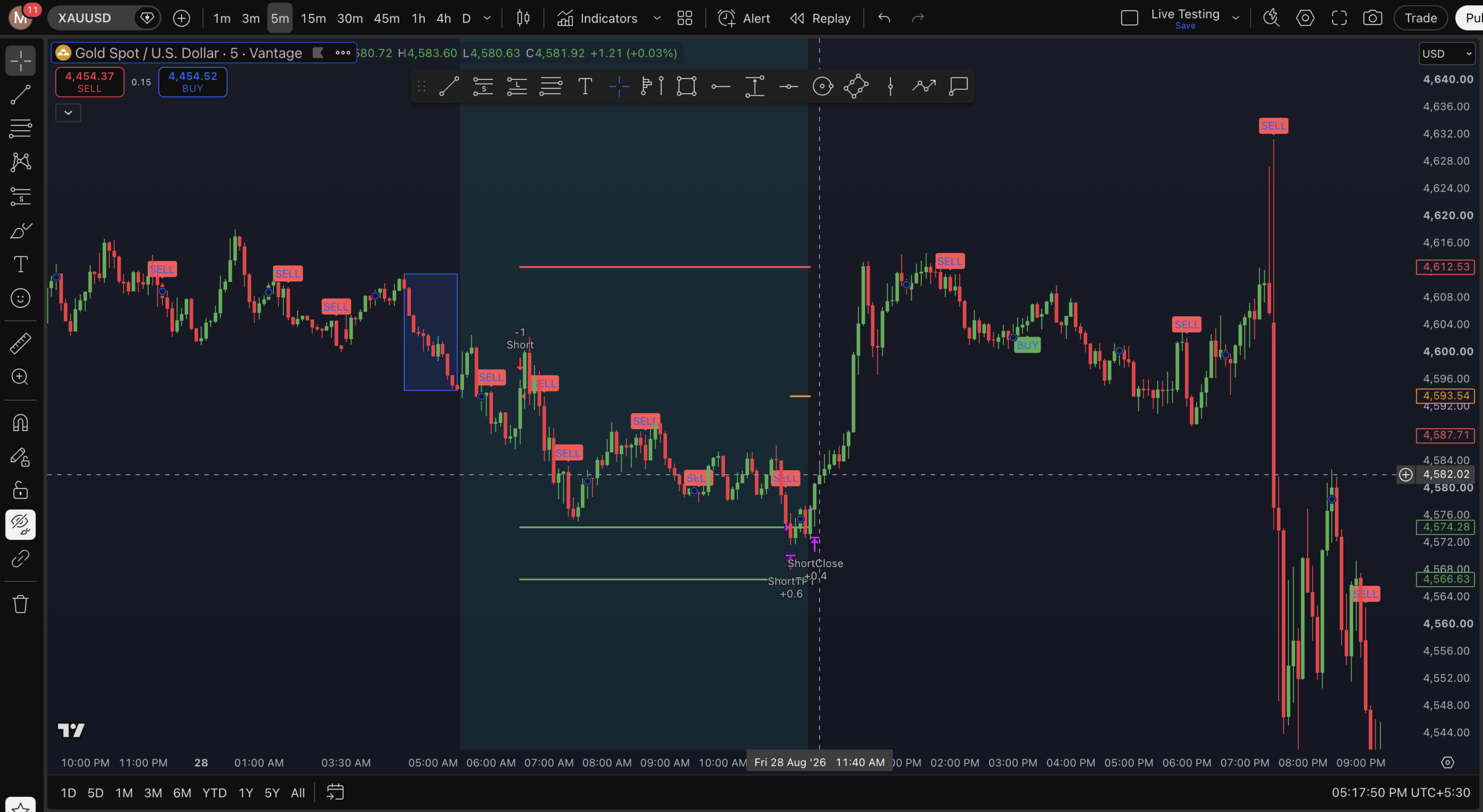
Gold (XAUUSD) experienced significant intraday volatility, with price facing strong selling pressure after a sharp rejection from higher levels. The 5-minute chart shows an initial bullish attempt followed by a strong bearish reversal, highlighting the importance of key resistance and support zones.
Gold Price Action Overview
During the session, Gold initially traded within a consolidation range around the 4,600–4,612 area. Buyers made several attempts to push the price higher, but the market struggled to sustain momentum above this zone.
Gold eventually made a sharp upside spike toward 4,632, but the breakout failed to hold. Strong selling pressure immediately followed, resulting in a rapid decline toward the 4,544 area.
This sharp rejection suggests that the 4,620–4,632 zone is currently acting as a strong supply and resistance area.
Key Resistance Levels
The following resistance levels are important for short-term XAUUSD traders:
- 4,593–4,600: Immediate resistance zone
- 4,612: Key intraday resistance
- 4,620–4,632: Major resistance and supply zone
A sustained move above 4,612 could indicate renewed buying interest. If buyers manage to hold above this level, the next upside targets could be around 4,620 and 4,632.
Key Support Levels
On the downside, the following levels deserve close attention:
- 4,574: Immediate support
- 4,566: Secondary support
- 4,552–4,544: Major support zone
The recent sell-off pushed Gold toward the 4,544 area, making this zone particularly important for the next directional move.
A decisive break below 4,544 could increase the probability of further downside momentum.
Technical Outlook
The 5-minute structure currently shows bearish momentum, particularly after the rejection from 4,632.
The aggressive sell-off indicates strong selling interest at higher levels. However, after such a sharp decline, a short-term pullback or recovery attempt cannot be ruled out.
Instead of entering immediately after a large bearish move, traders may consider waiting for:
- A confirmed rejection from resistance.
- A confirmed support breakdown.
- A potential retest after a breakout or breakdown.
- Proper stop-loss and position sizing based on market volatility.
Bullish Scenario
If Gold stabilizes above the 4,566–4,574 support zone and successfully reclaims 4,593 and 4,612, buyers could attempt a recovery.
In this scenario, the potential upside levels to watch are:
4,612 → 4,620 → 4,632
A sustained breakout above 4,632 would be particularly important because it could invalidate the current short-term bearish structure.
Bearish Scenario
On the other hand, continued weakness below 4,566 could bring sellers back into control.
The next major downside area would be:
4,552–4,544
A decisive breakdown below 4,544 could strengthen the bearish outlook and potentially lead to another leg lower.
Key XAUUSD Levels at a Glance
| Price Level | Significance |
|---|---|
| 4,632 | Major Resistance |
| 4,620 | Resistance |
| 4,612 | Key Intraday Resistance |
| 4,593 | Immediate Resistance |
| 4,574 | Immediate Support |
| 4,566 | Secondary Support |
| 4,552 | Major Support |
| 4,544 | Critical Intraday Support |
Final Outlook
The current XAUUSD 5-minute chart remains bearish in the short term, mainly due to the sharp rejection from the 4,632 area and the subsequent aggressive sell-off.
The 4,566–4,574 support zone and 4,593–4,612 resistance zone are likely to play an important role in determining the next move.
Until Gold reclaims the major resistance levels, traders may remain cautious about bullish setups. Conversely, a strong reaction from support could provide an opportunity for a short-term recovery.
Key takeaway: Traders should focus on confirmed price action around the major support and resistance zones rather than chasing sharp moves. Proper risk management remains essential, especially during periods of elevated Gold volatility.
Risk Disclaimer: This analysis is provided for educational and informational purposes only. It is not financial advice or a guaranteed trading signal. Trading Gold and Forex involves substantial risk, and traders should conduct their own research and use appropriate risk-management strategies before entering any position.
